
Why Do Gums Recede? Causes, Treatment, and How to Protect Your Teeth
What Causes Gum Recession and Why Does It Happen?
Gum recession is not simply “the gums becoming weak”. The gum margin has moved away from its normal position, leaving part of the tooth root exposed. Sometimes the change is limited to one lower front tooth. Sometimes it affects several teeth and reflects deeper loss of the tissues and bone supporting them.
The distinction matters. A patient with one sharply defined area of recession caused by traumatic brushing does not need the same treatment as someone whose gums have receded because of periodontitis.
Plaque-induced inflammation remains a major cause. Plaque collects where the tooth meets the gum. When it is not removed properly, it matures, hardens into calculus and keeps the surrounding tissue inflamed. Gingivitis may begin with bleeding and swelling. Periodontitis is more destructive: attachment and supporting bone can be lost, pockets form around the teeth, and the gum margin may move downwards. Untreated periodontitis can eventually leave teeth mobile or unsalvageable.
Yet recession is not always a cleanliness problem.
Overbrushing is regularly underestimated. A person may brush twice or even three times a day and still damage the gums because the technique is forceful. A hard-bristled brush, a vigorous horizontal scrubbing movement and abrasive tooth powders can gradually wear the gum margin and the root surface. The damage often appears around prominent canine teeth, premolars, or the lower incisors.
The brush does not have to look worn out for the pressure to be excessive.
Thin gums are less forgiving. Some people naturally have a delicate gingival phenotype with thin underlying bone on the outer surface of the teeth. A tooth positioned slightly outside the ideal arch may have very little tissue covering its root. Even modest inflammation, brushing trauma or orthodontic movement can expose the weakness. Thin periodontal tissue is recognised as being more susceptible to progressive recession.
Orthodontic treatment is often blamed too quickly. Braces and aligners do not automatically cause gum recession. Risk increases when a tooth is moved beyond the available bone, particularly during arch expansion, or when plaque control is poor throughout treatment. In a carefully assessed case, correcting a badly positioned tooth may actually improve the conditions around the gum. The biological limits of the bone matter more than whether the appliance is fixed or removable.
Other contributors include smoking and smokeless tobacco, oral piercings, poorly contoured crowns or fillings, an abnormal frenum pull, clenching, grinding, and repeated trauma from fingernails or objects held between the teeth. Diabetes does not directly pull the gum down, but poorly controlled diabetes increases susceptibility to periodontal disease and may interfere with healing.
Age is associated with recession, though age itself is not a diagnosis. A gum margin that has moved over decades may reflect accumulated brushing trauma, untreated inflammation, tooth position, dry mouth, and previous dental work. Describing it as “normal ageing” can delay useful treatment.
A proper assessment for gum recession treatment in Kochi should identify which of these factors is active. Covering an exposed root without correcting the cause gives an attractive result for a while, then the recession may return.
What Are the Early Signs of Gum Recession You Should Never Ignore?
The first change is often visual. One tooth begins to look longer than the neighbouring teeth. The colour near the gum line may also change because root dentine is yellower than enamel.
Sensitivity is common but inconsistent. Cold water, hot tea, sweet food, sour fruit or even cool air may produce a short, sharp sensation. Some exposed roots remain completely comfortable. Lack of pain does not make the condition harmless.
A small notch at the gum line deserves attention. Patients sometimes assume this is simply “wear”. It may be a combination of recession and non-carious cervical tooth damage caused by brushing, acidic exposure or loading forces. The root is softer than enamel and can wear more quickly once exposed.
Bleeding changes the discussion. Recession with bleeding, redness, swelling, pus, persistent bad breath or a bad taste suggests active inflammation rather than a stable anatomical defect. Gum disease can remain relatively quiet until it becomes advanced, so absence of severe pain should not be reassuring.
Watch the spaces between the teeth. If the gums between teeth appear to be shrinking, food begins to lodge more often or black triangular gaps become visible, there may be interproximal attachment loss. Complete root coverage is less predictable when the supporting tissue between adjacent teeth has already been lost.
Mobility is a later warning. A tooth that moves under finger pressure, changes position or feels different during chewing requires prompt examination. Recession alone does not always shorten the life of a tooth, but recession combined with bone loss, deep periodontal pockets and mobility is a different clinical problem.
Photographs help. Take a clear image under similar lighting every few months rather than relying on memory. Gum changes are slow, and patients commonly realise how far recession has progressed only after comparing an older photograph.
Do not repeatedly test a sensitive root with ice water. It proves nothing and keeps irritating the area.
What Are the Best Treatment Options for Gum Recession?
Treatment depends on whether the recession is active, whether gum disease is present, how much root is exposed, the thickness of the remaining tissue and the condition of the supporting bone.
The first step is measurement, not surgery.
A periodontal examination records recession depth, probing depths, bleeding, plaque levels, mobility, tissue thickness and the amount of attached gum. Dental radiographs may be needed to assess bone loss. Tooth position, bite forces, brushing technique, previous orthodontic movement and the shape of restorations should also be examined.
For shallow, stable recession without inflammation, monitoring may be entirely reasonable. Not every exposed root needs a graft.
Sensitivity can often be managed with a desensitising toothpaste containing an appropriate active ingredient. It should be placed directly over the sensitive area after brushing and left undisturbed rather than rinsed away immediately. Results are rarely instant. A few days of irregular use followed by abandonment is a familiar reason for failure.
Fluoride varnish, bonding agents or a small tooth-coloured restoration may be considered when the root is sensitive, worn or at risk of decay. Restorative material does not replace missing gum. It covers damaged tooth structure. Overbuilding the area can make cleaning difficult and create a bulky gum-line contour.
Where plaque and calculus are driving inflammation, professional cleaning is required. Calculus cannot be removed with brushing or flossing. Periodontitis may require cleaning beneath the gum line, risk-factor control and repeated periodontal review. Antibiotics are not a routine cure for recession and should not be used as a substitute for mechanical plaque removal.
Gum grafting is considered when the tissue is very thin, recession is progressing, the root is sensitive or difficult to clean, root coverage is aesthetically desirable, or the site needs a stronger band of protective tissue. Tissue may be taken from the palate or obtained from another suitable grafting source. The aim may be complete root coverage, tissue thickening or prevention of further deterioration.
Complete coverage is not guaranteed.
Results are generally more predictable when the bone and gum between the teeth remain intact. Deep recession, prominent roots, previous loss of interdental support, smoking, poor plaque control and repeated mechanical trauma reduce predictability. Lower front teeth can be particularly demanding because the tissue is often thin and the space for surgical manipulation is limited.
Post-operative behaviour matters more than patients expect. Pulling the lip down repeatedly to inspect the graft, brushing the surgical area too early, eating hard food on the site or missing review appointments can disturb early healing. A graft may look pale, uneven or slightly alarming during the first stages of healing; constant handling does not help.
Orthodontic correction may be part of treatment when tooth position is contributing to the recession. It may need to happen before grafting, after tissue thickening or occasionally instead of surgery. That sequence cannot be decided from a photograph.
Patients seeking Gum Recession Treatment in Kochi sometimes ask whether a graft should be combined with Smile correction in Kochi. It can be appropriate, particularly when recession affects the visible front teeth, but periodontal stability comes first. Veneers or crowns placed before the gum problem is controlled may lock the case into poor margins and compromised cleaning.
How Can You Prevent Gum Recession from Getting Worse?
Start with the toothbrush. Soft bristles are usually safer around a thin or receding gum margin, but “soft” does not compensate for excessive pressure. The brush should be guided, not driven.
Electric brushes with pressure sensors can help, though they are not foolproof. Some users still lean heavily on the brush head and keep it stationary against the gum. Technique needs to be observed, not assumed.
Do not stop cleaning the receded area because it bleeds. That allows more plaque to accumulate. Clean it gently and have the cause of the bleeding assessed. Brushing harder to “remove the infection” is equally misguided.
The movement should be small and controlled at the gum line. Long horizontal strokes across several teeth at once tend to concentrate trauma on prominent roots. Replace the brush head when the bristles flare. A brush that becomes splayed within a few weeks usually indicates excessive pressure.
Interdental cleaning must match the space. Floss may suit tight contacts. Interdental brushes are often more effective where spaces have opened, but forcing an oversized brush through a narrow gap can injure the papilla. Water flossers can be useful as an adjunct; they do not remove every form of attached plaque.
Avoid routine use of highly abrasive powders, charcoal products and improvised mixtures. A product described as herbal or natural can still be abrasive. Sensitivity after brushing is not evidence that the teeth have become cleaner.
Tobacco control is part of gum treatment, including smokeless forms. Smoking may suppress obvious bleeding even while periodontal destruction continues, creating a deceptively calm appearance.
Grinding and clenching need a realistic assessment. A night guard may protect teeth in selected patients but does not compensate for active gum disease or incorrect brushing. Poorly fitted guards can collect plaque or alter contact patterns.
Patients with diabetes need coordinated control of both oral inflammation and blood glucose. Dry mouth also deserves attention, especially in people taking several long-term medicines, because an exposed root is more vulnerable to decay when saliva is reduced. Gum recession and dry mouth together raise the risk of root caries.
Regular review should be based on risk rather than a fixed calendar for everyone. A stable, healthy mouth may not need the same recall interval as active periodontitis, rapidly progressing recession, smoking, diabetes or complex restorative work.
Good Preventive Dentistry in Kochi should include comparison of gum measurements over time. Simply polishing the teeth at every visit without recording recession or periodontal pockets can miss gradual deterioration.
After Gum Recession Treatment in Kochi, maintenance is not optional. Surgery changes the anatomy; it does not remove the habits, inflammation or tooth-position problems that caused the defect.
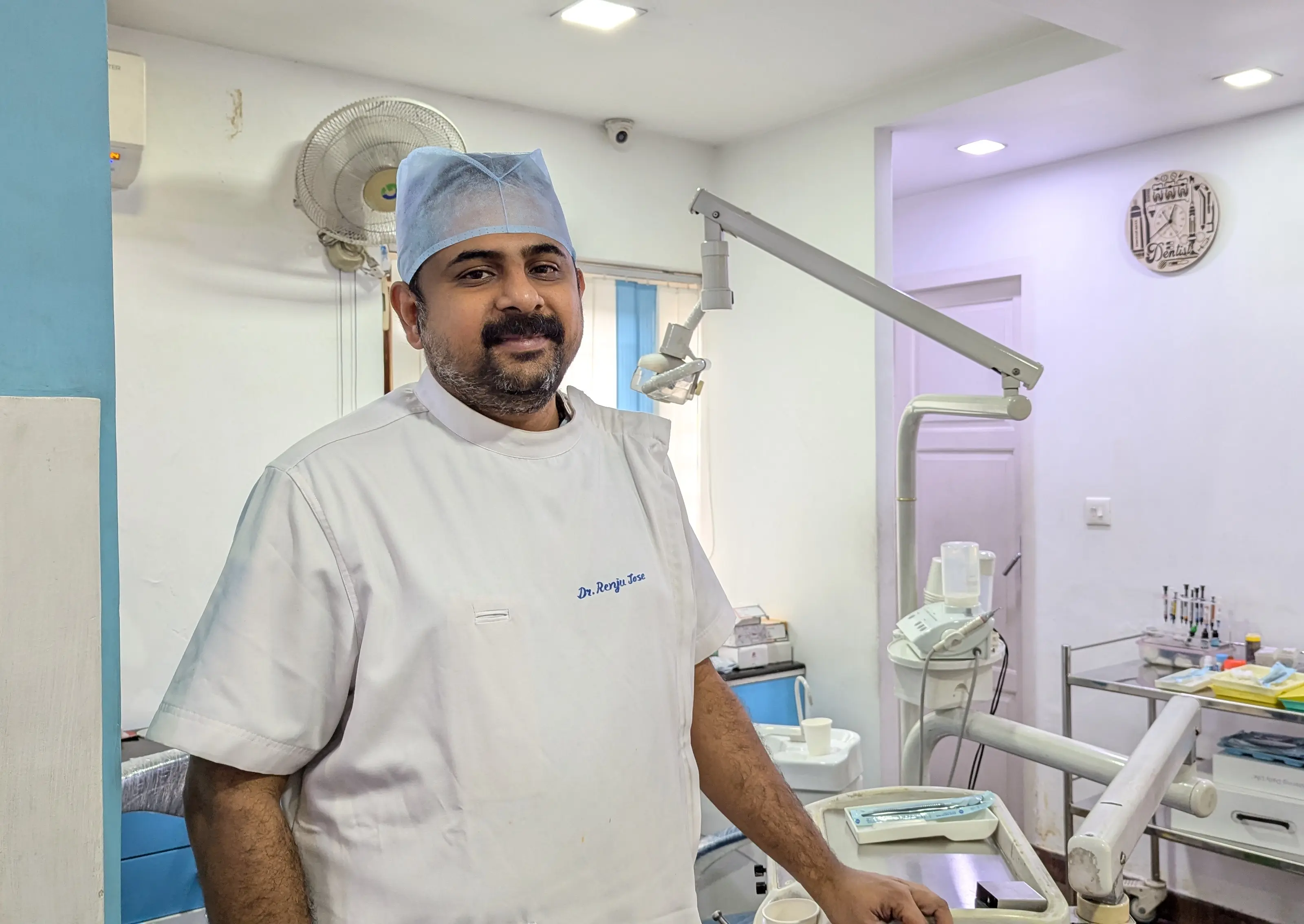
A cracked tooth can sometimes have symptoms that are difficult to identify without a professional examination. Prof. Dr. Renju Jose brings over 20 years of dental experience, with specialized expertise in Endodontics, Orofacial Pain, TMD, and Oral Implantology.
At Kalarickal Dental Care in Panampilly Nagar, Kochi, he evaluates dental pain, sensitivity, and tooth damage to understand the underlying problem and plan appropriate care. Seeking timely advice from an experienced dentist in Kochi can help protect a damaged tooth from further complications.
When Should You Visit a Dentist for Receding Gums?
Arrange an assessment when a tooth appears longer, a root becomes visible or sensitivity lasts beyond a brief episode.
Seek earlier attention if there is bleeding during brushing, swelling, pus, persistent bad breath, food trapping, gum tenderness, tooth movement or a recent change in the bite. These features may indicate active periodontal disease, infection or loss of supporting tissue.
A rapidly changing gum line deserves investigation. So does recession around a dental implant. Implant-related tissue loss is not managed in exactly the same way as recession around a natural tooth.
Do not wait for severe pain. Gum disease may progress with surprisingly little discomfort.
People planning braces, aligners, veneers or crowns should have existing recession assessed before treatment begins. Thin gums, roots positioned outside the bony housing and active periodontal inflammation can complicate otherwise straightforward cosmetic or orthodontic work.
Referral to a periodontist is sensible when recession is extensive, progressing, associated with significant bone loss, difficult to diagnose or likely to require grafting. Periodontists are trained in non-surgical periodontal care, gum surgery, and soft-tissue grafting.
Choosing Gum Recession Treatment in Kochi should not begin with asking which graft technique is best. The useful questions are more basic: Why did the tissue recede? Is the cause still active? Is the site maintainable? Is the aim comfort, stability, root protection, appearance or all four?
A treatment plan that cannot answer those questions is premature.
FAQ
1. Is gum recession always caused by gum disease?
No. Periodontitis is a major cause, but recession can also result from forceful brushing, thin gum tissue, prominent or misaligned teeth, certain orthodontic movements, oral piercings, frenum pull and poorly shaped restorations. A clean-looking mouth can still have traumatic recession. A person with heavy plaque can have both inflammatory and mechanical causes at the same site.
2. Is gum recession common as people get older?
It becomes more common with age, but it should not automatically be dismissed as an unavoidable part of ageing. The gum margin may reflect decades of accumulated inflammation, brushing trauma, dry mouth, tobacco exposure and dental treatment. Older adults also retain their natural teeth for longer, giving recession and exposed-root problems more time to become apparent.
3. Does gum recession cause bad breath?
A recession by itself may not cause bad breath. The areas around exposed roots can become difficult or uncomfortable to clean, allowing plaque and food debris to remain. Bad breath is more likely when recession is accompanied by gum inflammation, deep periodontal pockets, infection, dry mouth or decay. Persistent bad breath should not be managed indefinitely with mouthwash without checking the cause.
4. Can gum recession lead to tooth loss?
A small, stable area of recession does not necessarily threaten the tooth. The risk changes when recession occurs with periodontitis, substantial bone loss, root decay, deep cervical damage or poor plaque control. Advanced periodontal disease can destroy the tissues and bone that hold teeth in place, leading to mobility and eventual tooth loss.
The exposed root is not as resistant to decay and wear as enamel. Protecting it early is easier than restoring a deeply damaged root later. For patients considering Gum Recession Treatment in Kochi, the sensible objective is not merely to make the tooth look shorter.
Visit Your Trusted Dentist in Panampilly Nagar, Kochi
Choosing the right dental professional ensures long-term oral health, comfort, and personalized care. At Prof. Dr. Renju Jose’s clinic, patients receive expert treatment using advanced technology and a patient-centered approach. Whether you need routine preventive care or specialized treatments, you’re in trusted hands.
Contact Address
Kalarickal Dental Care
28/93A, Main Avenue, near DDRC SRL corporate office, Manorama Junction, Panampilly Nagar, Kochi Kerala 682036
090203 03031


Locate Us

© 2026 Kalarickal Dental Care. All rights reserved.
© 2026 Kalarickal Dental Care.
All rights reserved.